Newport and the sea of wealth
Newport reads as two cities at once: a tolerant colonial port of synagogue, taverns, and wharves, and the summer capital of the Gilded Age, where America's richest families built marble palaces above the Atlantic. The Cliff Walk runs the seam between them.
The colonial port and its tolerance
Long before the mansions, Newport was one of colonial America's busiest ports, with a religious and commercial mix unusual for its time. The Touro Synagogue, dedicated in 1763, is the oldest surviving synagogue in the United States and a lasting sign of the early Jewish community that the colony's tolerance allowed.
That older Newport is still walkable in the harbor district, the colonial street grid, and long-running rooms like the White Horse Tavern, which traces its building to 1673.
The marble palaces
In the late 19th century Newport became the summer resort of the American elite, who built mansions they coyly called 'cottages' along Bellevue Avenue and the shore. The Breakers, completed in 1895 for Cornelius Vanderbilt II to designs by Richard Morris Hunt, is the grandest, a 70-room Italian Renaissance statement of Vanderbilt wealth.
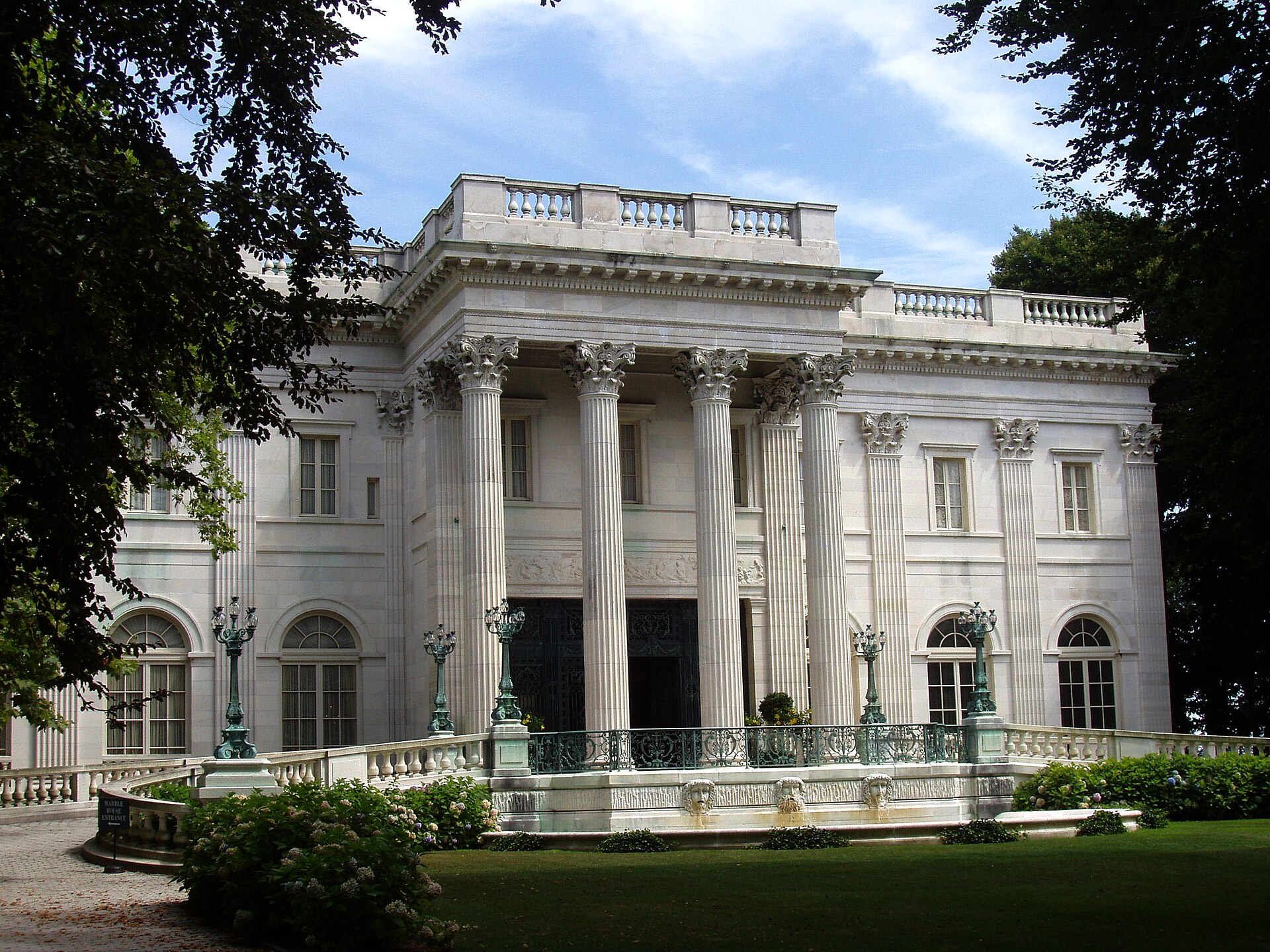
Its neighbors each take a different register: Marble House of 1892, also by Hunt; The Elms, modeled on a French château; and Rosecliff, completed in 1902 by Stanford White after the Grand Trianon at Versailles, famous for the largest ballroom in Newport. The Preservation Society of Newport County now keeps them open to visitors.
The public edge
Between the lawns of the mansions and the open Atlantic runs the Cliff Walk, a three-and-a-half-mile public path along Newport's eastern shore that has carried walkers past the back gardens of private wealth for generations. It is the best single way to feel the scale of the Gilded Age against the indifference of the sea.
The walk pairs naturally with a mansion tour: one side shows the manicured ambition, the other the rocks and surf that no fortune could tame.
Two Newports
The marble is only half the story. The same port that hosted the summer elite had been, a century earlier, a leading center of the transatlantic slave trade, and the Gilded Age palaces ran on the labor of servants, gardeners, and immigrant communities who never appear in the society pages.
Read together, Newport is less a museum of wealth than a place to think about who pays for it. The colonial harbor, the synagogue, the mansions, and the working town are all the same small city.
Reviewed source trail
- The Preservation Society of Newport County — Newport Mansions — checked 2026-06-19
- Touro Synagogue National Historic Site — checked 2026-06-19
- Discover Newport — history — checked 2026-06-19