Blackstone Valley and industrial America
Rhode Island's second great story is industrial. At Pawtucket in 1793, Samuel Slater's water-powered mill set off the American Industrial Revolution, and the Blackstone River was turned into a working machine of dams, mills, and immigrant mill villages.
The mill that started a revolution
In 1793 Samuel Slater, working from English textile knowledge he had carried to America, built a water-powered cotton-spinning mill on the Blackstone River at Pawtucket. The National Park Service identifies it as the birthplace of the American Industrial Revolution, the first place in the country to spin cotton by machine at scale.
Old Slater Mill still stands beside the river, and it makes the abstract idea of industrialization concrete: water, gears, spindles, and a new way of organizing work.
A valley turned into a machine
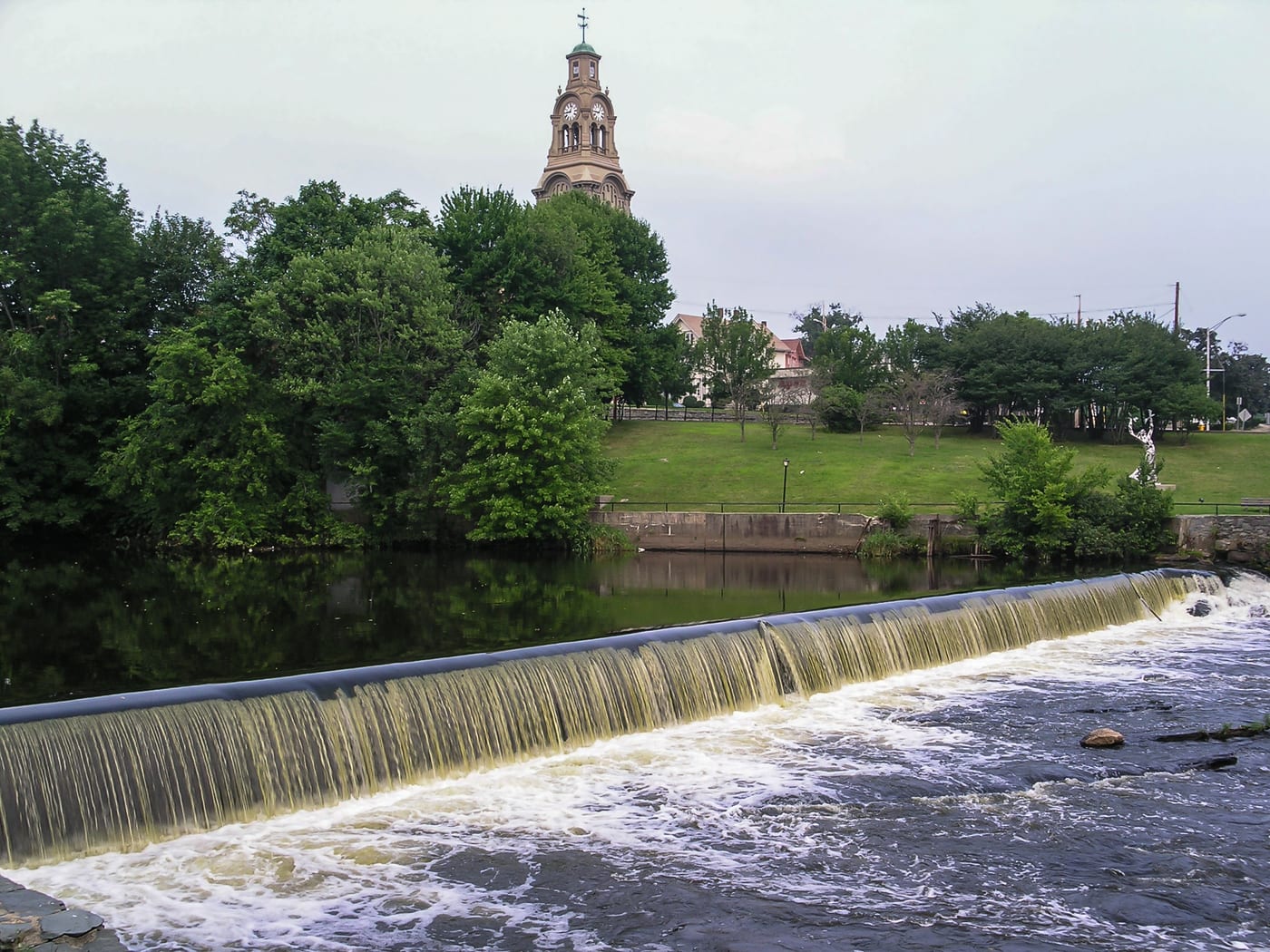
What began at Pawtucket spread up the Blackstone. The river's fall was harnessed by dams and canals, and a chain of mill villages grew along it, turning a farming valley into one of the first industrial corridors in the United States — a landscape now protected in part as a national historical park.
The Blackstone River Bikeway lets you read that landscape today, threading old mill sites, dams, and river towns on a flat, car-free route.
The people of the mills
The mills ran on people as much as water. Successive waves of immigrants — Irish, French-Canadian, Italian, Portuguese, and others — filled the mill villages, and in the early decades much of the workforce was women and children working long hours for low pay.
Those communities shaped Rhode Island's enduring character: its Catholic and immigrant neighborhoods, its food, and its tight local identities are downstream of the mill era as much as of the colonial port.
From sea to factory
The Blackstone story is the counterweight to Newport. Where the coast tells of merchants, mansions, and the sea, the valley tells of labor, machinery, and the river — the two economies that built the modern state.
Seeing both is the point. The Ocean State was also a factory state, and the move from wharf to water-wheel is one of its defining arcs.
Reviewed source trail
- Blackstone River Valley National Historical Park (NPS) — checked 2026-06-19
- NPS — Old Slater Mill and the Industrial Revolution — checked 2026-06-19