City guide · Newport County
Newport: from colonial port to Gilded Age resort
Newport sits at the southern tip of Aquidneck Island in Narragansett Bay, founded in 1639 by settlers who made liberty of conscience a founding principle. Over nearly four centuries it grew from a colonial merchant port deeply tied to the Atlantic slave trade, through Revolutionary occupation and a French alliance, into the leading summer resort of America's Gilded Age. Today it is a city of preserved mansions, a working harbor, a military and naval-education center, and a destination for sailing and music festivals.
A colonial port founded on liberty of conscience
Newport was founded in 1639 on what was then called Rhode Island, now Aquidneck Island, by settlers including William Coddington, Nicholas Easton, John Clarke and John Coggeshall. Many had come from the earlier settlement at Portsmouth, itself connected to dissenters who had left Massachusetts. The town's 1641 statutes established liberty of conscience, separating religious belief from civil authority at a time when most colonies enforced an established church. Rhode Island's 1663 royal charter from Charles II later guaranteed the same freedom across the colony.
That policy drew people of varied faiths. Newport became a center of Baptist and Quaker life, and in 1658 a group of Sephardic Jews, descended from families who had fled the Inquisition in Spain and Portugal, settled in the town. The mix of congregations was unusual for the period and shaped Newport's later reputation as a place of religious tolerance.
The colonial economy was built on maritime trade. A building on the present White Horse Tavern site has served as a tavern since 1673, when William Mayes acquired and enlarged it; it is generally described as the oldest tavern building in the United States and for years hosted meetings of the colonial General Assembly. By the mid-18th century Newport was one of the busiest ports in British North America.
That prosperity was directly tied to slavery. Newport was the principal slave-trading port in mainland North America during the colonial era, and Rhode Island merchants dominated the North American share of the Atlantic slave trade. Newport distilleries turned imported molasses into rum that was shipped to West Africa and exchanged for enslaved people, who were carried to the Caribbean and the mainland. Between roughly 1709 and 1807, Rhode Island merchants sponsored at least 934 slaving voyages and transported an estimated 106,000 enslaved Africans. Leading merchant families, among them Aaron Lopez, took part in this trade.
Touro Synagogue and a new nation's promise
The Jewish community that had settled in Newport from 1658 worshipped for more than a century before building a permanent home. The synagogue, now known as Touro Synagogue, was dedicated in 1763 and is the oldest surviving synagogue building in the United States. It was designed by Peter Harrison, a Newport architect trained in England, with a restrained Georgian exterior and an ornate interior.
In 1790, during a visit by President George Washington to Newport, Moses Seixas, a warden of the congregation, addressed a letter to him expressing hope for a government that would give, in his words, "to bigotry no sanction, to persecution no assistance." Washington's written reply repeated that phrase back to the congregation, affirming that the United States would not merely tolerate but guarantee the equal standing of citizens of all faiths.
The exchange is among the clearest early statements of American religious freedom as a civil right rather than a privilege extended by the majority. The building was designated a National Historic Site in 1946 and remains an active synagogue.
Revolution, occupation and the French alliance
Newport's strategic harbor made it a target during the War of Independence. British forces captured the town on December 8, 1776, and occupied it for nearly three years. The occupation badly damaged the port, and many residents fled; Newport never fully regained its pre-war commercial dominance.
After France entered the war as an American ally, a French fleet under Admiral d'Estaing arrived off Narragansett Bay in 1778 to support an American effort to retake the island. The plan unraveled when a severe storm scattered the fleets and the French withdrew to Boston for repairs. The Battle of Rhode Island, fought on August 29, 1778, covered the American withdrawal from the island. The First Rhode Island Regiment, which included Black soldiers, among them formerly enslaved men freed in exchange for service, held its position during the fighting.
The British abandoned Newport in October 1779. In 1780, a larger French expeditionary force under the Comte de Rochambeau landed at Newport and used it as a base. From here Rochambeau's army eventually marched to join Washington, a cooperation that led to the decisive victory at Yorktown in 1781.
The Gilded Age summer colony
In the second half of the 19th century, Newport became the leading summer resort of America's wealthiest families. Along Bellevue Avenue and the surrounding bluffs, industrial and financial fortunes built enormous summer houses that their owners called "cottages." The architect Richard Morris Hunt designed Marble House for William and Alva Vanderbilt, built between 1888 and 1892, and The Breakers for Cornelius Vanderbilt II, built between 1893 and 1895. Horace Trumbauer designed The Elms for coal magnate Edward Berwind, completed in 1901, and Stanford White designed Rosecliff for Theresa Fair Oelrichs, completed in 1902.
The Cliff Walk runs about 3.5 miles along the eastern shore, between the back lawns of these estates and the rocky coast. Its public right of way traces in part to colonial fishing-access rights, and the path as a continuous walk took shape in the late 19th century. In 1975 it was designated New England's first National Recreation Trail.
Newport also helped establish organized tennis in the United States. The Newport Casino, a social club designed by McKim, Mead & White, opened in 1880. It hosted the first U.S. National Lawn Tennis Championship in 1881, won by Richard Sears, and remained the tournament's home through 1914. The Casino now houses the International Tennis Hall of Fame and Tennis Museum.
Military, sailing and the modern city
Newport's harbor kept it central to American naval life. Fort Adams guards the entrance to the harbor; the large stone fortification standing today was built between 1824 and 1857 as part of the country's coastal defense system. The fort and its grounds became Fort Adams State Park in 1965. In 1884 the U.S. Naval War College was established on Coasters Harbor Island, the first institution of its kind dedicated to the advanced study of naval strategy, and it remains in operation.
Sailing gave Newport another identity. From 1930 the city was the home of the America's Cup, the premier international yacht race, hosting defenses across five decades. In 1983 the New York Yacht Club lost the Cup at Newport to Australia II, ending a winning streak that had lasted since 1851 and closing Newport's era as the Cup's host.
Newport became a center for American music in the mid-20th century. The Newport Jazz Festival, founded by Elaine and Louis Lorillard and organized by George Wein, began in 1954, and the Newport Folk Festival followed in 1959. Both are now held at Fort Adams State Park and draw audiences each summer.
Today Newport's economy centers on tourism, sailing and its naval presence. Visitors come for the preserved mansions, the Cliff Walk, the colonial streets of the harbor district and the working waterfront, a layered record of the city's nearly four centuries of history.
Places worth a stop
Where to go in Newport
Brenton Point State Park
The Ocean Drive headland park for sea air, wind, and sunsets, useful as a short stop on the scenic loop rather than a ticketed attraction.
Last checked
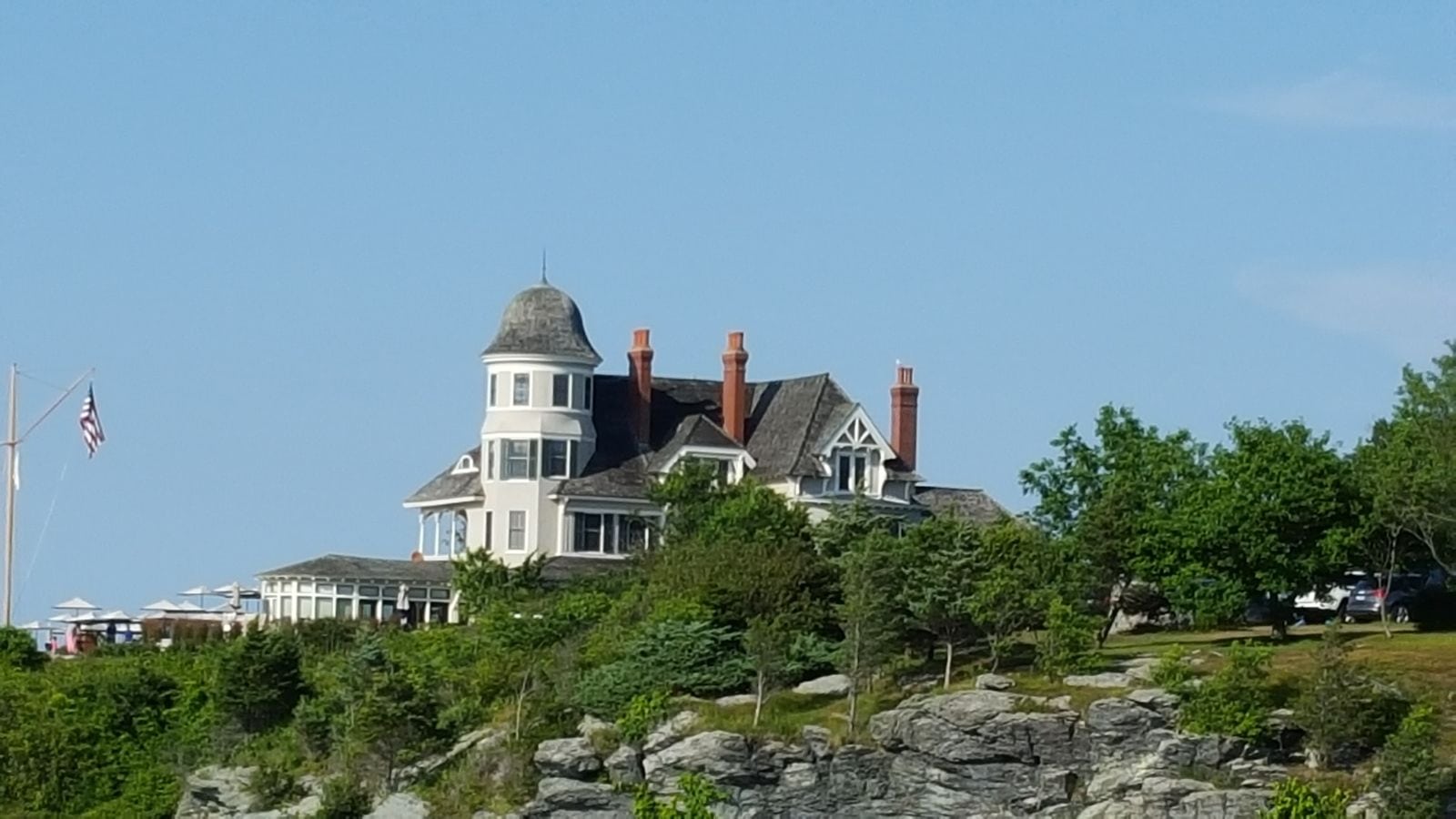
Castle Hill Inn
An inn at the western end of Ocean Drive, for a stay centered on the property and coast. Downtown visits and evening mansion tickets need a separate transport plan.
Last checked
Easton's Beach (First Beach)
Newport's main town beach at the north end of the Cliff Walk, useful for a swim, the boardwalk, and an easy walk-to stop from downtown.
Last checked
Fort Adams State Park
A large harbor-side fort and state park on the Ocean Drive side, useful for sailing views, festival grounds, and a Newport stop that is not a mansion.
Last checked
International Tennis Hall of Fame
A Bellevue Avenue museum and historic grass-court complex, useful as an indoor-friendly Newport stop near the mansions on a rainy or hot day.
Last checked
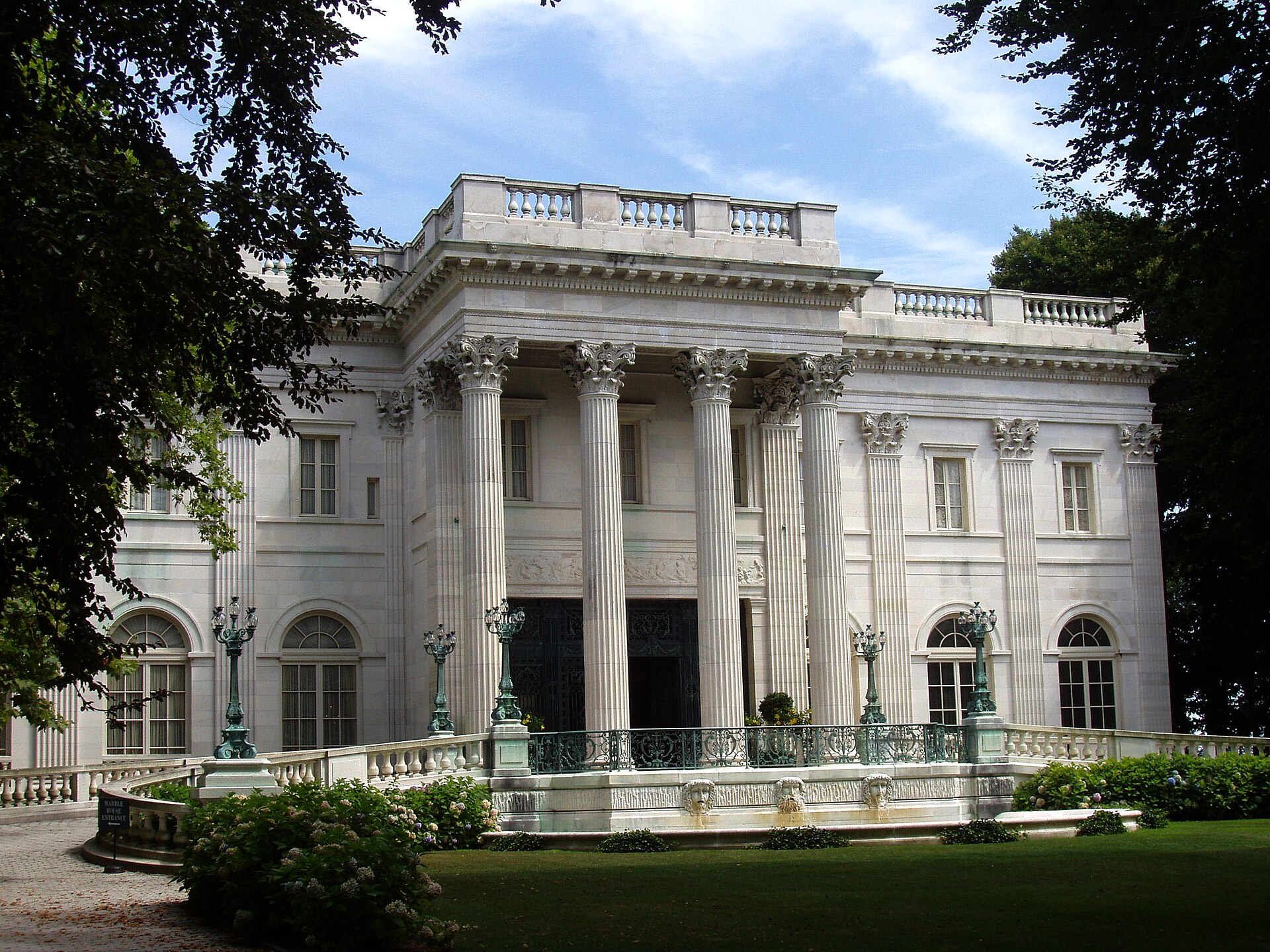
Marble House
A Vanderbilt Gilded Age mansion of 1892 by Richard Morris Hunt, Marble House set the template for Newport's marble palaces and its Chinese Tea House overlooks the sea.
Last checked
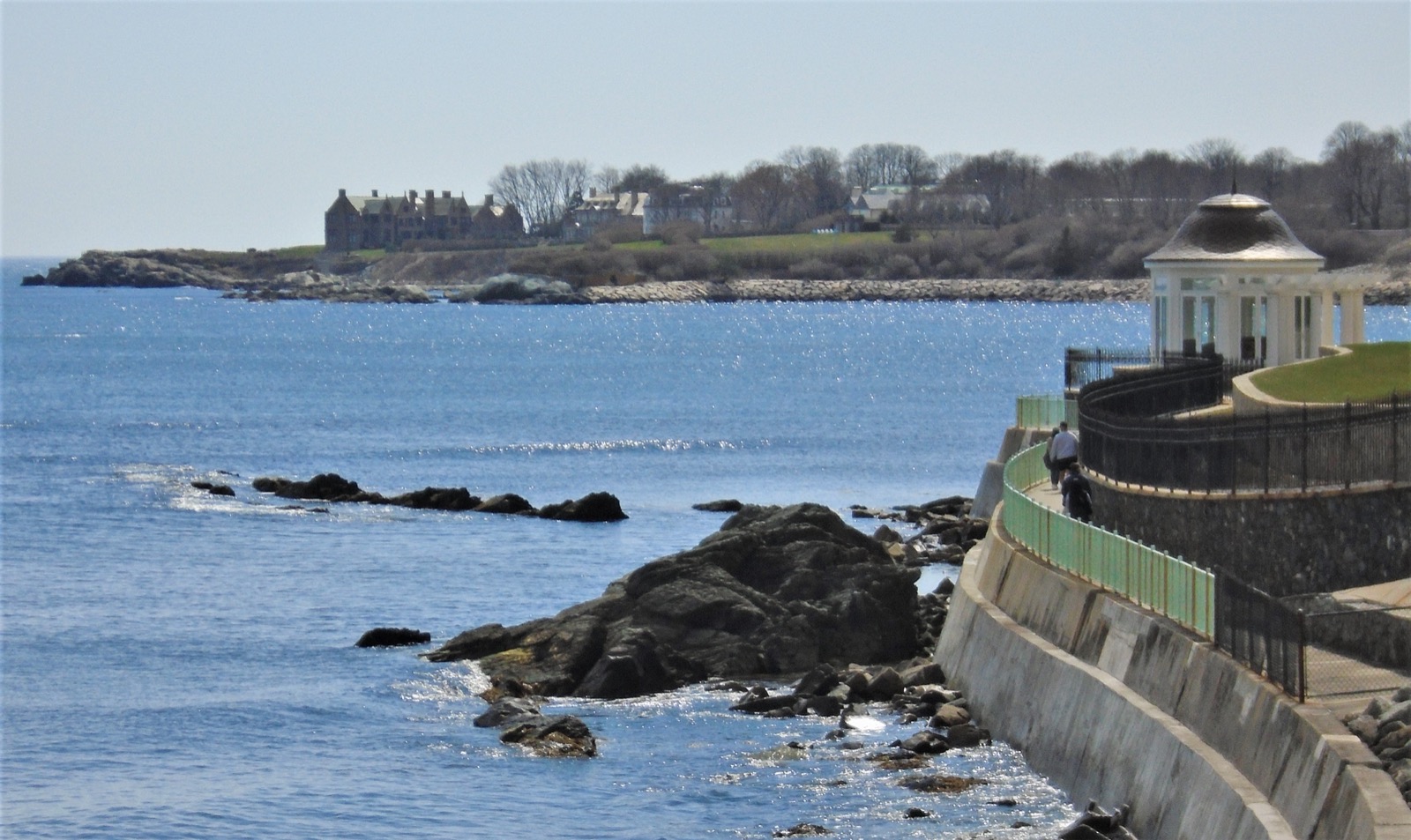
Newport Cliff Walk
The Newport coastline explanation in one walk: ocean edge, mansion context, and enough friction to make shoe choice and weather matter.
Last checked
A waterfront resort on Goat Island with a marina and harbor views, useful as a Newport base slightly removed from the Thames Street crowds.
Last checked
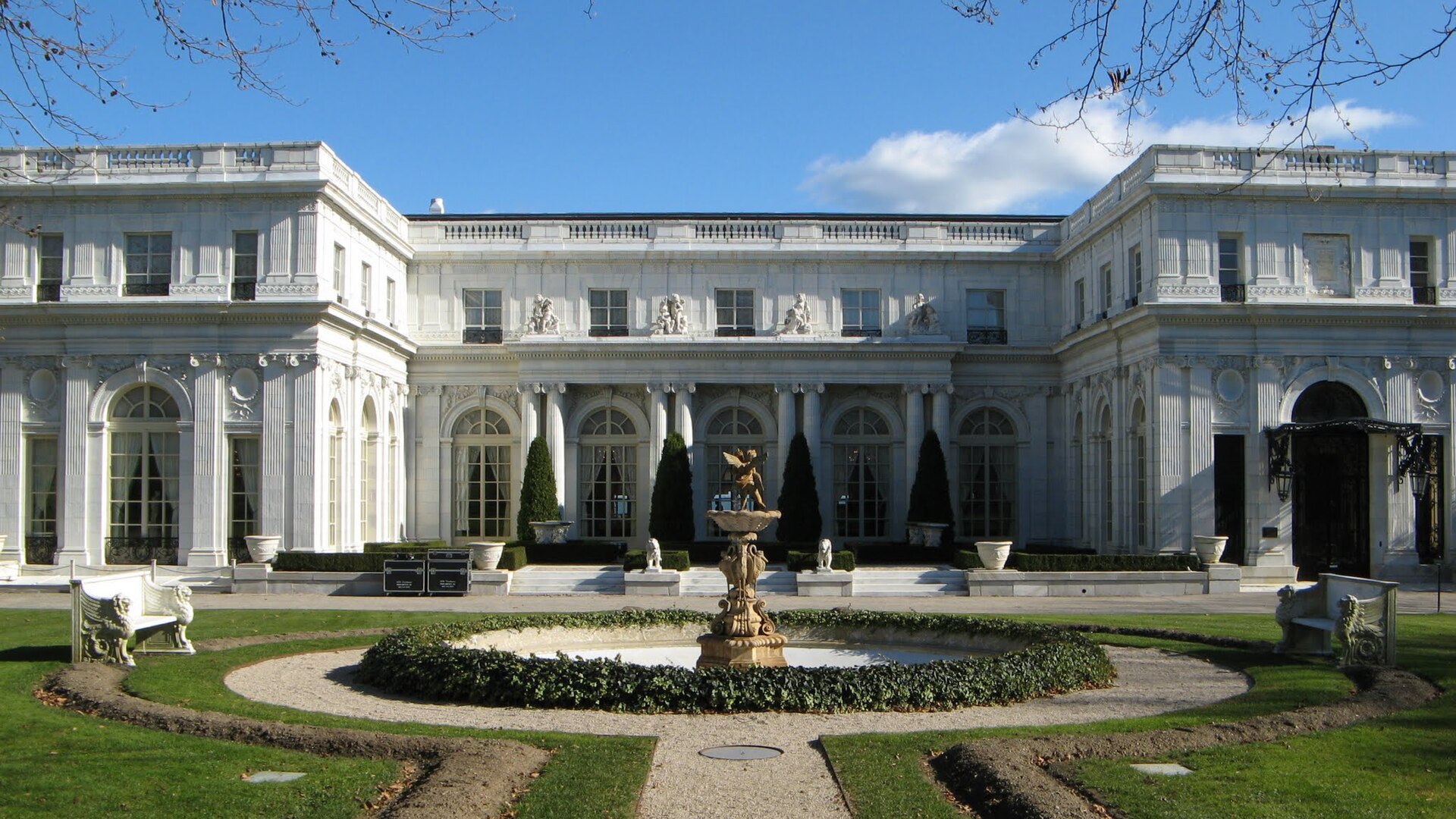
Rosecliff
Designed by Stanford White and completed in 1902 after the Grand Trianon at Versailles, Rosecliff is famed for its heart-shaped staircase and the largest ballroom in Newport.
Last checked
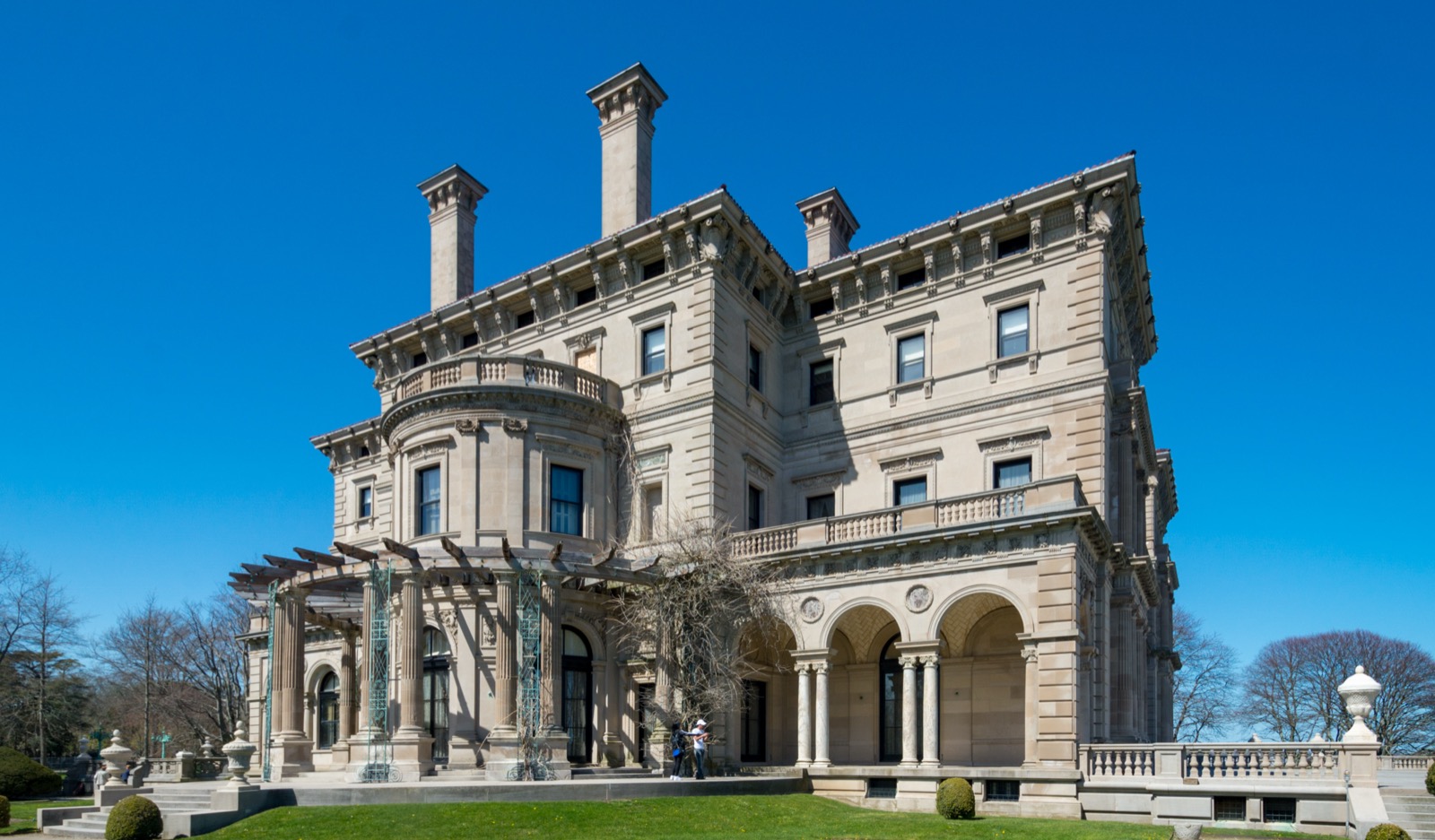
The Breakers / Newport Mansions
The clearest reason Newport deserves to lead a first Rhode Island itinerary instead of being treated as a quick coastal side trip.
Last checked
A small luxury hotel at the start of the Cliff Walk, useful when the trip is Newport-led and walkable coastal access matters more than price.
Last checked
The Elms
The Bellevue Avenue mansion to pair with The Breakers when one Gilded Age house is not enough; ticketed and run by the Preservation Society of Newport County.
Last checked
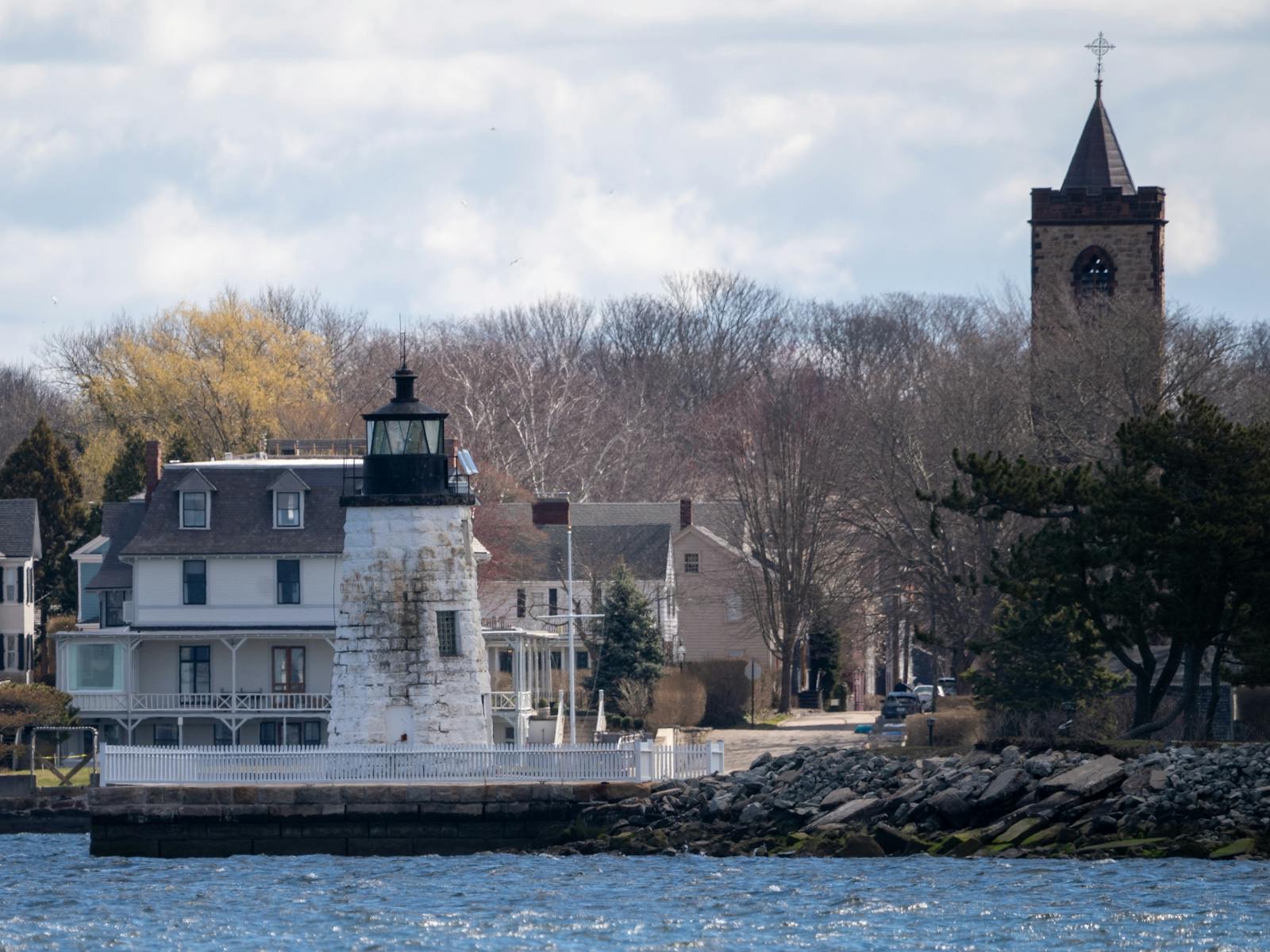
A Newport harbor restaurant for visitors who want the coast to continue into dinner instead of treating food as an afterthought after mansions.
Last checked
The White Horse Tavern
A historic Newport restaurant for trips where the evening should reinforce the city's colonial and waterfront character, not only its mansion circuit.
Last checked
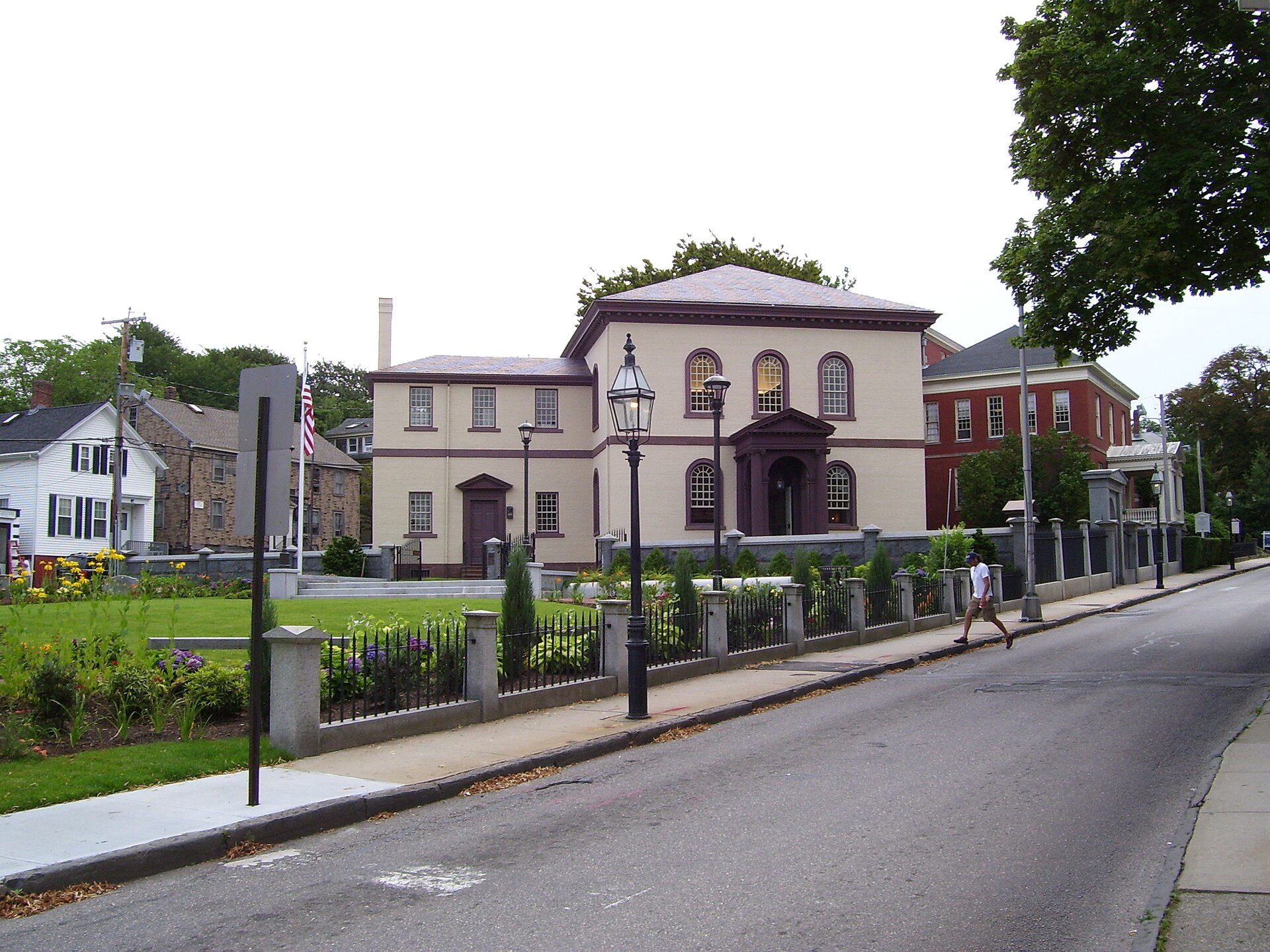
Touro Synagogue
Dedicated in 1763, Touro Synagogue is the oldest surviving synagogue in the United States and a National Historic Site, anchoring Newport's long story of religious freedom.
Last checked
Sources
Reviewed source trail
- Newport Historical Society — A Brief History of Newport — checked 2026-06-27
- White Horse Tavern (Newport, Rhode Island) — Wikipedia — checked 2026-06-27
- Rhode Island slave trade — Wikipedia — checked 2026-06-27
- Touro Synagogue — U.S. National Park Service — checked 2026-06-27
- Battle of Rhode Island — Wikipedia — checked 2026-06-27
- The Breakers — Newport Mansions (Preservation Society of Newport County) — checked 2026-06-27
- Newport Cliff Walk — Wikipedia — checked 2026-06-27
- Fort Adams — Wikipedia — checked 2026-06-27